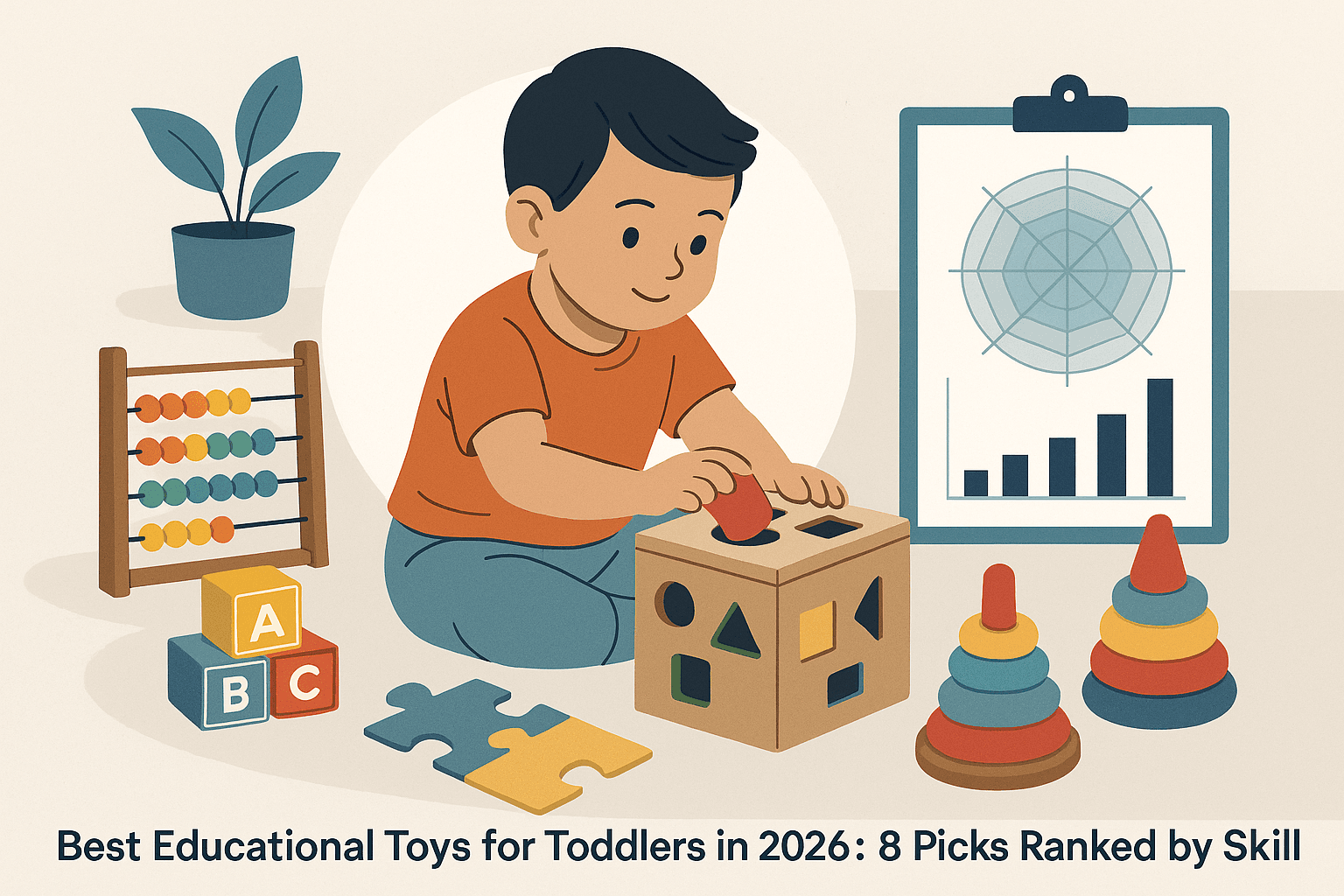
How We Picked These Toys
| Criteria |
Weight |
Why It Matters |
| Skill development |
High |
Open-ended toys build motor, language, and problem-solving |
| Durability and safety |
High |
Toddlers are rough; choking hazards are a real concern |
| Replay value |
Medium |
Toys that grow with the child are better value |
| Age fit (2–4) |
Medium |
The right challenge level keeps kids engaged |
These are category recommendations, not paid placements. Always check the manufacturer's age rating and supervise play. Last updated: June 2026.
1. Magnetic Tiles — Best for Problem-Solving
Best for: STEM and spatial reasoning. Magnetic building tiles (such as Magna-Tiles and similar sets) click together into endless shapes and structures. They are arguably the highest-replay-value toy on this list.
Skills Built
- Spatial reasoning and early geometry
- Fine motor control and planning
Watch For
- Verify sets are age-rated for toddlers; smaller pieces suit older kids
- Quality varies — look for strong magnets and sturdy seams
Who This Is Best For
Toddlers ready for building, and families wanting one toy that lasts for years.
2. Large Building Blocks — Best for Motor Skills
Best for: Hands-on construction. Chunky blocks like LEGO Duplo or Mega Bloks are sized for small hands and are a toddler staple.
Skills Built
- Hand-eye coordination and grip strength
- Cause-and-effect and basic counting
Watch For
- Stick to toddler lines (Duplo/Mega Bloks), not standard small bricks
- Store in a bin to make cleanup part of play
Who This Is Best For
Younger toddlers building their first towers and developing grip.
3. Wooden Puzzles — Best for Focus
Best for: Concentration and shape recognition. Simple peg and chunky wooden puzzles teach problem-solving and patience.
Skills Built
- Shape, color, and number recognition
- Sustained attention and fine motor skills
Watch For
- Choose chunky knobs for little fingers
- Match the piece count to your child's level
Who This Is Best For
Toddlers learning to sit, focus, and complete a task.
4. Pretend-Play Sets — Best for Language
Best for: Vocabulary and social skills. Play kitchens, toy food, doctor kits, and tool sets fuel imaginative play that drives language growth.
Skills Built
- Vocabulary and storytelling
- Social-emotional and role-play skills
Watch For
- Wooden or sturdy plastic lasts longer
- A few open-ended pieces beat one elaborate set
Who This Is Best For
Toddlers in a big language-development window who love to imitate adults.
5. Montessori Activity Toys — Best for Independence
Best for: Practical-life skills. Montessori-style toys — busy boards, object permanence boxes, stacking rings, and shape sorters — emphasize independent, self-directed play.
Skills Built
- Independence and self-confidence
- Fine motor precision
Watch For
- Look for natural materials and simple design
- Rotate toys to keep novelty without clutter
Who This Is Best For
Parents who value calm, focused, screen-free play.
6. Subscription Play Kits — Best for Age-Matched Challenge
Best for: Hands-off curation. Developmental subscription boxes (such as Lovevery) ship age-staged toys matched to each phase.
Skills Built
- Stage-appropriate cognitive and motor skills
- Variety without over-shopping
Watch For
- Higher cost than buying individually
- You give up choosing each item yourself
Who This Is Best For
Busy parents who want expert-curated toys delivered on schedule.
7. Ride-On and Balance Toys — Best for Gross Motor
Best for: Big-muscle movement. Push walkers, ride-ons, and toddler balance bikes build coordination and burn energy.
Skills Built
- Balance, coordination, and core strength
- Confidence and independence
Watch For
- Match size and weight limits to your child
- Always use helmets and supervise outdoors
Who This Is Best For
Active toddlers who need to move, and families with outdoor space.
8. Art and Sensory Supplies — Best for Creativity
Best for: Self-expression and sensory development. Chunky crayons, washable paint, play dough, and water-mat books invite creative, sensory-rich play.
Skills Built
- Pre-writing grip and creativity
- Sensory processing and color learning
Watch For
- Choose non-toxic, washable, toddler-safe supplies
- Sensory play is messy — plan accordingly
Who This Is Best For
Toddlers who love to make, squish, and explore.
Quick Comparison
| Toy Category |
Primary Skill |
Age Fit |
Replay Value |
| Magnetic tiles |
Problem-solving |
3–4+ |
Very high |
| Building blocks |
Motor skills |
2–4 |
High |
| Wooden puzzles |
Focus |
2–3 |
Medium |
| Pretend-play sets |
Language |
2–4 |
High |
| Montessori toys |
Independence |
2–3 |
Medium-High |
| Subscription kits |
Age-matched |
2–4 |
High |
| Ride-on/balance |
Gross motor |
2–4 |
High |
| Art/sensory |
Creativity |
2–4 |
High |
How to Choose the Right Toy
Skip toys that do all the work — the ones that flash and talk often hold attention for minutes, while open-ended toys hold it for years. Match the toy to your child's current stage, favor durable materials, and remember that fewer, better toys usually beat a crowded toy box. Rotating toys in and out keeps things fresh without constant buying.
How We Researched This
We grouped toys by the developmental skill they build, drawing on child-development guidance and parent reviews, and weighted skill-building and durability most heavily. We name well-known brands as examples, not endorsements. Always follow the manufacturer's age and safety ratings. Last updated: June 2026. We review this guide annually.
Frequently Asked Questions
What are the best educational toys for toddlers?
Open-ended toys — magnetic tiles, building blocks, wooden puzzles, and pretend-play sets — top the list because they build real skills and grow with your child.
What age are these toys for?
Most suit ages 2–4. Always check the specific product's age rating, since piece size and complexity vary.
Are magnetic tiles safe for toddlers?
Choose toddler-rated sets with securely sealed magnets and supervise play, since loose or swallowed magnets are dangerous. Smaller-piece sets are for older children.
Do subscription toy boxes work?
They offer expertly staged, age-matched toys with less shopping, at a higher cost than buying individually. They suit busy parents who value curation.
Are screen-based learning toys good for toddlers?
Hands-on, open-ended toys generally support development better at this age. Pediatric guidance favors limited screen time for toddlers.
How many toys does a toddler need?
Fewer than most expect. A small set of high-quality, open-ended toys — rotated occasionally — usually beats a large, cluttered collection.
What toys help with talking?
Pretend-play sets, books, and any toy that invites back-and-forth conversation are excellent for vocabulary and language growth.
What is a Montessori toy?
A simple, often natural-material toy designed for independent, self-directed play that builds practical-life and fine-motor skills.
Important Disclosures
This content is for general informational purposes only and is not a substitute for pediatric or child-development advice. Always follow manufacturer age and safety ratings, check for choking hazards, and supervise toddler play. Brand names are examples, not endorsements.